





Say No To Extraction
When the infection has spread to the innermost portion of the tooth (pulp), your dentist suggests you to undergo root canal treatment to save the tooth. If treated early, root canal therapy need not be uncomfortable. With the use of local aesthetics, the entire procedure can be totally painless. The development of nickel-titanium instruments and modern methods of filling and sealing the root canal system, now allow us to complete most root canal therapies in one visit, saving valuable time of our patients as well improving the success rate of the treatment.
What is a Root Canal Treatment?
It consists of the removal of the infected pulp or the nerves that lies within the root of the tooth. It is this infected pulp tissue that causes pain and ultimately abscess. The Dentist will examine the tooth and x-rays before numbing the area around the affected tooth.
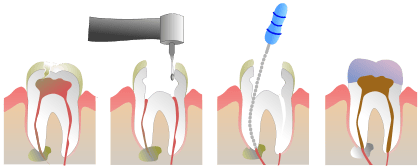
First of all access is obtained to the nerve by establishing a small opening in the top of the tooth, under a local anaesthesia.
The length of the root canal is determined with the help of small needles and the infected pulp is removed.
After that, the canals where the nerve is located are reshaped and prepared to accept a special root canal filling material.
The number of visits necessary to complete your root canal will depend upon the infected state of the nerve, and the complexity of the procedure.
The final step in your root canal will be the sealing of the root canal with a sterile, plastic material called gutta percha in order to prevent possible future infection.
Some indications of the need for root canal treatment
1 .If you will feel spontaneous pain or throbbing while biting
2. If you will feel sensitivity to hot and cold foods
3. Severe decay or an injury that creates an infection in the bone
Sometimes when there has been long standing infection or abscess, there may be some soreness associated with the root canal visit. If this should turn out to be true, You will be given specific instructions to follow to minimize the discomfort. When an infection is present, it may be necessary to take an antibiotic. If pain should be present, analgesics may need to be prescribed. The tooth will then possibly need a post and core and a crown in order to re-establish normal form and function. This decision will be based upon several additional factors.
Lorem ipsum dolor sit amet, consectetur adipiscing elit. Ut elit tellus, luctus nec ullamcorper mattis, pulvinar dapibus leo.
Frequently Asked Questions
Is a root canal treatment painful?
Modern root canal treatment is generally no more uncomfortable than having a regular filling. Your dentist will use local anaesthetic to ensure the area is numb during the procedure. Most patients report significant relief from the pain caused by an infected or damaged tooth after treatment.
How do I know if I need a root canal?
You may need a root canal if you experience symptoms such as persistent toothache, sensitivity to hot or cold temperatures, swelling around the gums, pain when chewing, or a darkened tooth. However, some teeth with infected pulp may show few or no symptoms. A dental examination and X-rays can determine whether root canal treatment is necessary.
How long does a root canal-treated tooth last?
With proper care, a tooth that has undergone root canal treatment can last for many years, and often for a lifetime. Maintaining good oral hygiene, attending regular dental check-ups, and following your dentist’s recommendations—such as having a crown placed if needed—can help protect the treated tooth and ensure its long-term success.